
Florida Criminal Defense Analysis
Florida criminal-defense guidance on police contact, arrests, warrants, constitutional limits, court conditions, and the evidence that controls the case.


A criminal case turns on both the facts and what the law permits the State to do with them.

Are License Plate Frames Illegal in Florida? What Changes October 1, 2026
Florida created criminal penalties for plate obstruction in 2025. The Legislature has now added an express safe harbor for ordinary frames—but a separate traffic-stop statute still matters.
By Abraham Elmazahi, Esq.Can You Get a DUI While Your Tesla Is Self-Driving in Florida?
Tesla FSD (Supervised), Florida autonomous-vehicle law, and why "the computer was driving" does not automatically eliminate DUI exposure.
Read the analysis →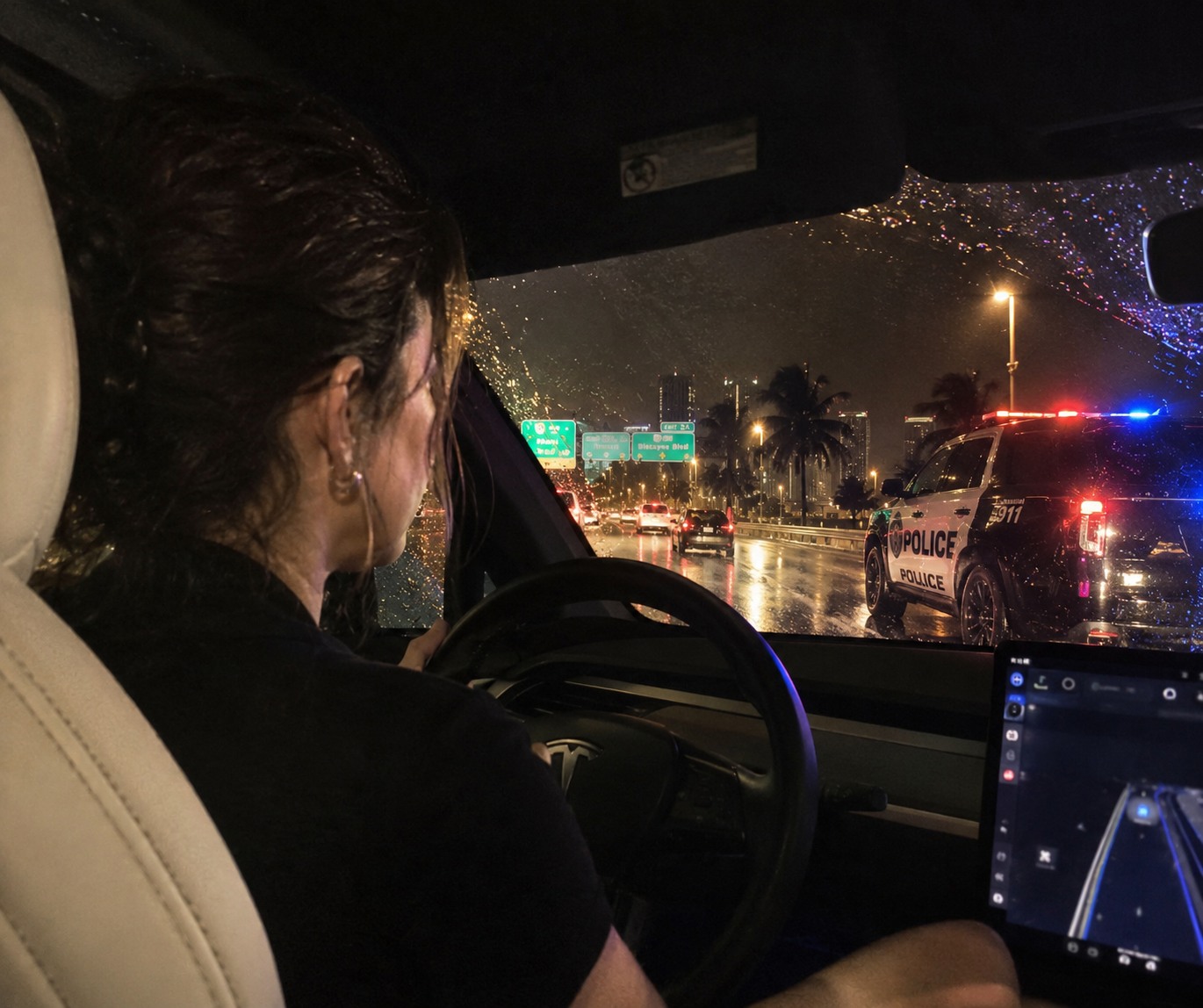
Do Flock Safety Cameras Violate Your Fourth Amendment Rights in Florida?
ALPR capture, retrospective searches, retention, warrants, and suppression issues.
Read the analysis →Start with the situation that is happening now.
Eleven deeper analyses built around the immediate events that most often force a criminal-defense decision.
The first hours after release are about controlling conditions, preserving evidence, and understanding what the State has actually started—not trying to explain the accusation away.
→ 02Police ContactA Detective Contacted You: Why “Your Side of the Story” Can Become EvidenceA detective’s invitation to “clear something up” is still an investigative event. Before answering, determine what the police already know, what they are trying to prove, and whether a statement helps or simply fills gaps.
→ 03Court ProcedureYour First Court Date Is Coming: Conditions, Deadlines, and Early DecisionsThe first scheduled court date can affect release conditions, counsel, charging posture, plea decisions, discovery, and the timetable for the defense.
→ 04Domestic ViolenceAccused of Domestic Violence: Statements, No-Contact Orders, and Early EvidenceDomestic-violence cases can change housing and family contact before the evidence is tested. Early defense work should separate the court order from the accusation and reconstruct the event from independent proof.
→ 05Drug OffensesA Drug Arrest or Search Issue: The Stop, the Search, and the State’s ProofA drug case is often two cases at once: whether police lawfully obtained the evidence and whether the State can prove knowing possession, intent, weight, and identity of the substance.
→ 06DUI & Criminal TrafficA DUI Arrest and License Crisis: Two Proceedings, Different DeadlinesA Florida DUI arrest can create a criminal case while a separate driver-license suspension moves on its own track. The deadlines and proof are related, but they are not the same proceeding.
→ 07Release ConditionsFlorida No-Contact Orders: What Counts as Contact and Why Third Parties MatterA no-contact order is enforced as a court order, not as a private agreement. Direct messages, indirect contact, shared accounts, property exchanges, and family logistics can all create problems if the order is not modified first.
→ 08Probation ViolationsProbation Violations and VOP Warrants: Why the Ordinary Bond Rules May Not ApplyA violation-of-probation case has its own arrest, release, proof, and sentencing structure. The first question is whether the allegation is technical or new-law—and what § 948.06 permits the court to do.
→ 09Police InterviewsShould You Talk to Police? Cooperation, Interrogation, and Self-IncriminationCooperation is not measured by how much evidence a person volunteers. The decision to speak should account for custody, the investigative posture, what police already know, and whether a statement advances a defined objective.
→ 10After ArrestWhat to Do During the First 72 Hours After a Florida ArrestThe first three days are when release conditions take effect, first appearance occurs for those still in custody, evidence starts disappearing, and avoidable communications can reshape the case.
→ 11Court ProcedureFlorida First Appearance After Arrest: Bond, Release Conditions, and What the Judge DecidesThe 24-hour hearing can determine release, detention posture, no-contact terms, travel restrictions, and the conditions that govern the case from the start.
→Then test the allegation against the law and the proof.
Ten substantive analyses organized by recurring Florida criminal-defense issues, evidentiary questions, and court posture.
A misdemeanor is not a disposable case. Jail exposure, probation, license consequences, domestic-violence conditions, records, employment effects, and future enhancements can make early investigation matter.
→ 02DUI & Criminal TrafficDUI and Criminal Traffic Defense: The Case Often Begins Before the Breath TestMany DUI and criminal-traffic questions arise before any chemical test: why the vehicle was stopped, how the encounter expanded, what the video shows, and whether the State can prove driving, impairment, or another charged element.
→ 03Domestic ViolenceDomestic Violence Defense: When a Relationship Dispute Becomes a Criminal CaseA domestic-violence prosecution is not controlled by whether the relationship continues. The case turns on admissible evidence, witness dynamics, court orders, statutory consequences, and what the State can prove.
→ 04Felony DefenseFelony Defense in Florida: Charging Decisions, Sentencing Exposure, and Trial LeverageFelony defense requires simultaneous control of proof, admissibility, sentencing exposure, and litigation posture. The charge degree is only the beginning; the scoresheet, enhancements, mandatory provisions, and evidence determine the real risk.
→ 05Drug OffensesDrug-Offense Defense: Possession, Constructive Possession, Searches, and Laboratory ProofFlorida drug cases can turn on who possessed the substance, whether police lawfully found it, what the laboratory actually identified, and whether the State can prove intent or trafficking weight.
→ 06Violent FeloniesViolent-Felony Defense: Witness Reliability, Self-Defense, Forensics, and IntentViolent-felony cases are often built from competing human accounts plus physical evidence. The defense must reconstruct the event, evaluate self-defense and intent, and test whether the forensics actually support the State’s narrative.
→ 07Pre-Arrest InvestigationsPre-Arrest Investigations: Why the Best Defense Work May Begin Before ChargesBefore charges are filed, the defense may still have room to preserve evidence, control police contact, verify warrants, correct demonstrable errors, and prepare for charging or surrender without creating new evidence.
→ 08Police InterviewsPolice Interviews and Voluntary Encounters: When “Free to Leave” Is Not the Whole StoryA conversation can be legally voluntary and still be strategically dangerous. The defense must separate Fourth Amendment seizure questions from Fifth Amendment interrogation rules and from the practical risk of creating evidence.
→ 09Arrest WarrantsArrest Warrants and Controlled Surrender: Confirming the Warrant and Planning the Custody EventAn arrest warrant should be confirmed before decisions are made. When a warrant exists, controlled surrender can address logistics and bond preparation, but it does not erase custody risk or guarantee release.
→ 10Probation ViolationsFlorida Probation Violations: Technical Violations, New-Law Violations, and the Court’s AuthorityA probation violation can expose a defendant to renewed sentencing on the original case. Current § 948.06 distinguishes technical and new-law allegations and includes alternative-sanction structures that make classification important.
→