
Pre-Arrest Investigation Defense
Some of the most consequential defense decisions happen before an arrest, before a formal charge, and before the person knows what law enforcement has already collected.
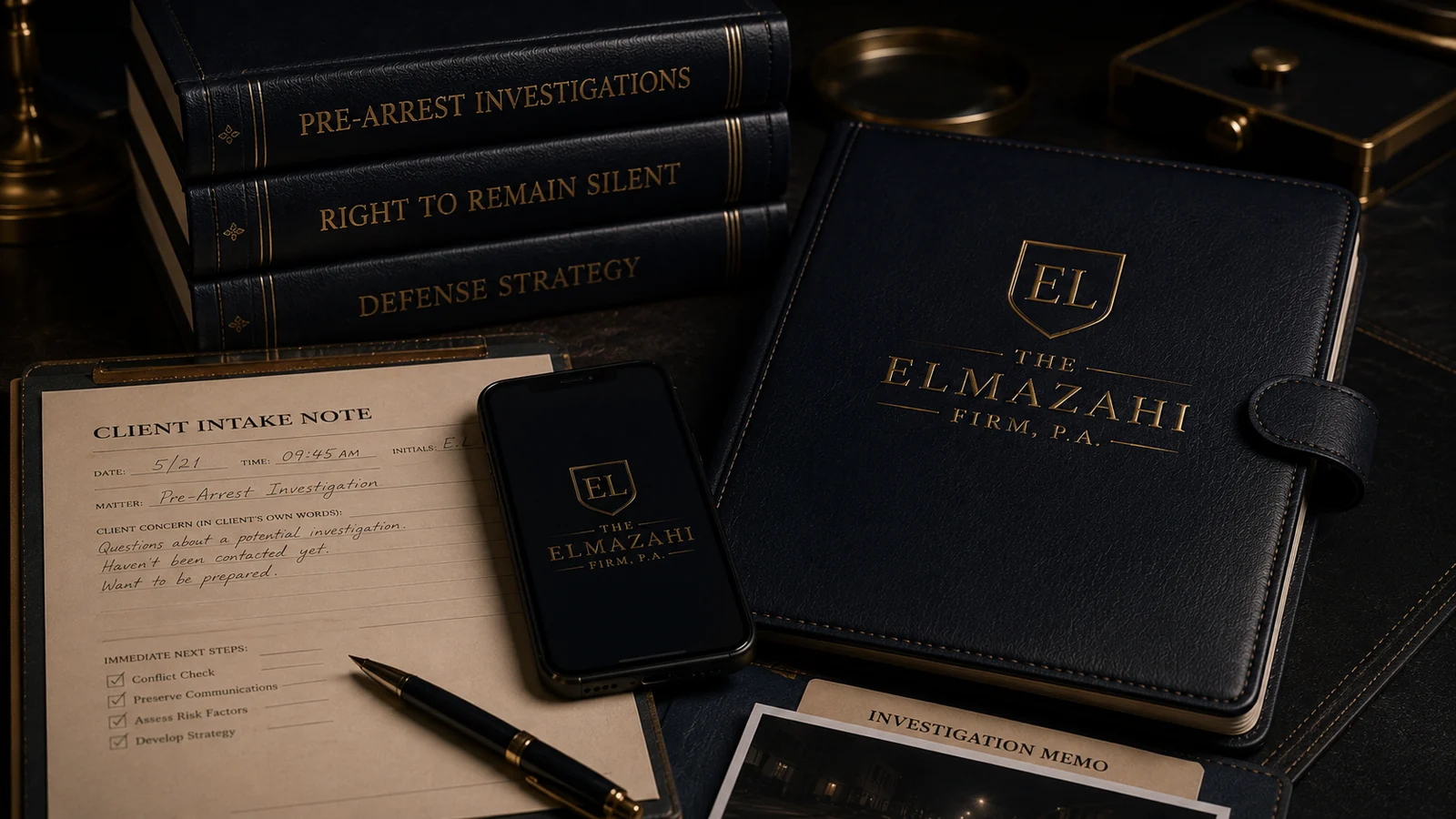
Control contact, preserve evidence, and confirm the actual posture.
Whether to speak, decline, preserve silence, or communicate through counsel.
Messages, video, documents, location records, witnesses, and digital material that may disappear.
Confirming status, bond information, location, timing, and controlled surrender planning.
What the investigating agency and prosecutor may be evaluating before filing.
The opportunity is not to “explain everything.” It is to avoid preventable damage.
A detective may describe the contact as informal, voluntary, or an opportunity to provide the person’s account. The defense must determine the actual investigative posture before any statement is given. Even a truthful explanation can supply admissions, timelines, locations, relationships, or inconsistencies that law enforcement did not previously possess.
Early representation can also preserve evidence. Surveillance may be overwritten, messages deleted, witnesses become difficult to locate, and digital records age out of ordinary access. The defense should identify useful material and send preservation requests before the record narrows.
The investigation may involve search warrants, phone extractions, financial records, Flock Safety or other location data, interviews, or a pending arrest warrant. Counsel can review what is publicly available, communicate when appropriate, and develop a surrender or charging strategy without promising that arrest or filing can be avoided.

Charging decisions are easier to assess when the prosecution process is familiar.
Abraham Elmazahi previously prosecuted misdemeanor, criminal-traffic, and felony cases. That experience informs the firm’s review of what investigators are collecting, what a prosecutor may view as chargeable, and where controlled early advocacy, evidence preservation, or surrender planning may affect the posture before a case is filed.
Map what law enforcement may already have
The review identifies the agency, known allegations, evidence at risk, digital collection, warrant status, and the channel for further communication.
- 01Who initiated contact, what was requested, and whether the person is a witness, subject, or target
- 02Known allegations, agency, jurisdiction, case or incident number, and existing public record
- 03Messages, photographs, surveillance, documents, receipts, location data, and witnesses to preserve
- 04Search warrants, subpoenas, device access, automated license plate data, and digital collection
- 05Active warrant, bond information, surrender location, logistics, and first-appearance preparation
- 06Counsel communication, pre-file mitigation, charging advocacy, and risk of additional contact
Use the pre-charge window without creating new exposure.
The plan should control communication, preserve favorable material, and prepare for continued investigation, filing, warrant, or surrender.
Establish the actual investigative posture before deciding whether to communicate.
Secure favorable evidence before ordinary deletion or overwrite periods expire.
Use counsel to prevent improvised explanations and unnecessary exposure.
Prepare for filing, warrant, surrender, first appearance, or continued investigation.
Control the next contact before an interview, warrant, or filing.
A consultation can identify the investigative posture, evidence to preserve, and the safest way to manage further contact.