
Probation-Violation Defense
A probation violation can place liberty at immediate risk. The burden, bond posture, hearing procedure, and sentencing authority differ from an ordinary new criminal case, so the response must be fast and case-specific.
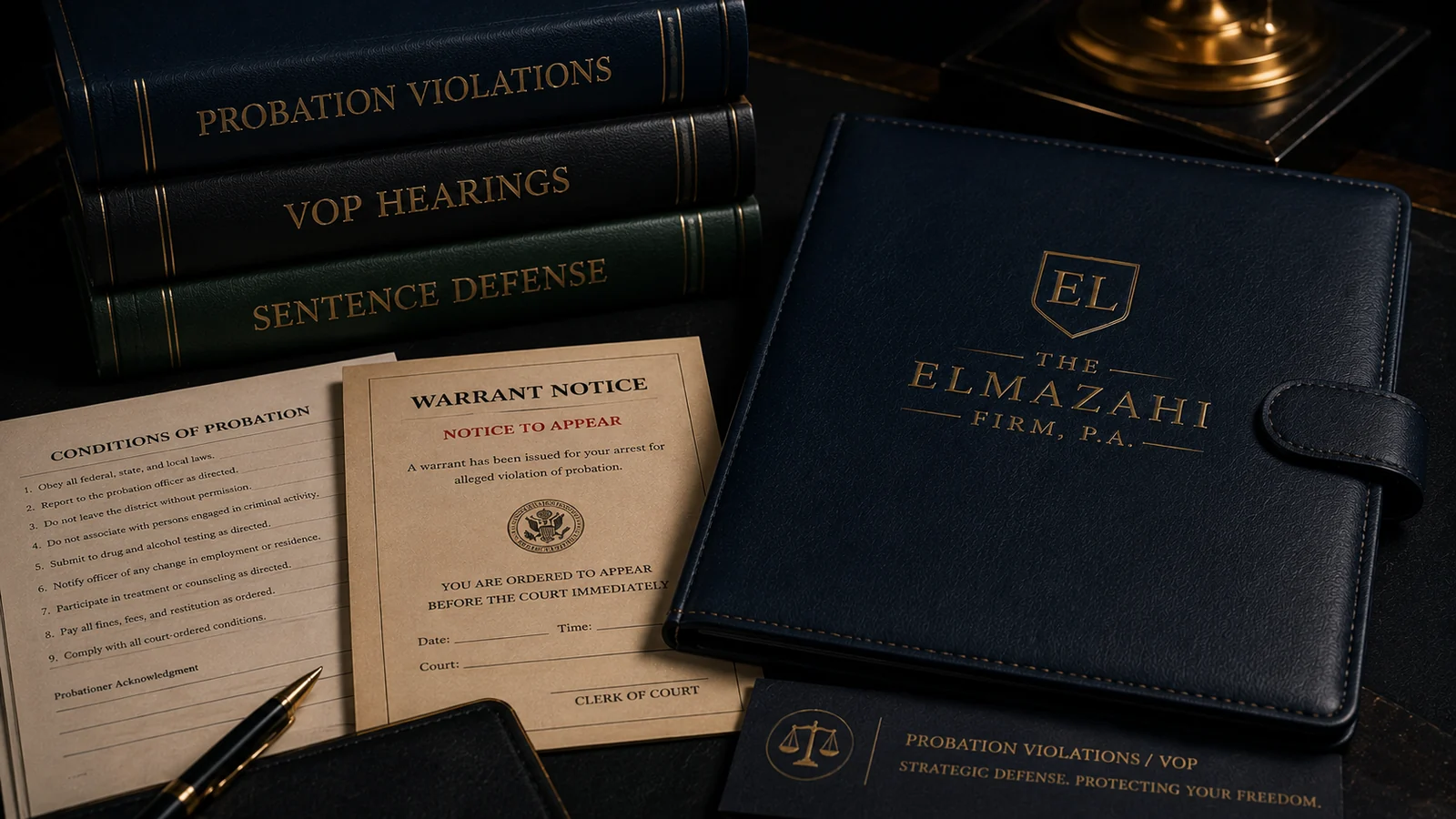
Confirm the warrant, hearing posture, and sentencing exposure first.
Warrant status, hold, surrender, bond availability, and immediate court posture.
Technical allegation, new-law offense, willfulness, substantiality, records, and witnesses.
Compliance history, treatment, employment, family, health, and corrective action.
Original offense, available sanctions, judicial concerns, and structured resolution options.
A violation hearing follows different rules from a new criminal trial.
Probation proceedings use different rules and procedures. The court may consider evidence and credibility in a posture unlike an ordinary jury trial, and the consequences can reach back to the original sentence. The defense must understand the underlying case, the supervision history, and the precise violation alleged.
Technical violations require analysis of willfulness and substantiality. New-law allegations require careful separation of the probation case from the pending criminal charge. Records from treatment providers, employers, probation, testing, or service programs may be as important as witness testimony.
A persuasive mitigation record should be built deliberately. Compliance history, treatment progress, employment, family responsibilities, medical issues, prompt corrective action, and a realistic plan can matter, but mitigation should be presented in a way that does not concede disputed allegations unnecessarily.

Violation allegations require an immediate reading of proof, custody risk, and sentencing posture.
Abraham Elmazahi’s prior prosecution experience informs the firm’s assessment of alleged new-law violations, technical violations, affidavits, warrants, witness proof, mitigation, and the sentencing position the State may take at a violation hearing.
Test the alleged violation and supervision record
The review ties the violation affidavit to the governing terms, available proof, supervision history, sanctions, and mitigation.
- 01Affidavit of violation, warrant, probation terms, and supervision chronology
- 02Technical records, testing, reporting, treatment, payment, and program compliance
- 03New-law reports, witnesses, recordings, probable cause, and pending-charge posture
- 04Willfulness, substantiality, notice, credibility, and admissibility issues
- 05Original sentence, available sanctions, prior compliance, and judicial concerns
- 06Mitigation documents, treatment plan, employment, housing, and structured resolution options
Separate immediate custody risk from proof and mitigation.
The plan should address custody and hearing status, the legal sufficiency of the allegation, omitted context, and proportionate resolution.
Determine warrant, custody, bond, and hearing status.
Test whether the alleged conduct occurred and legally constitutes a violation.
Present supervision history and facts the violation affidavit may omit.
Contest the violation or build a proportionate plan addressing the court’s concerns.
Confirm the warrant, allegation, and hearing posture without delay.
A consultation can identify custody risk, available proof, mitigation priorities, and the next court decision.